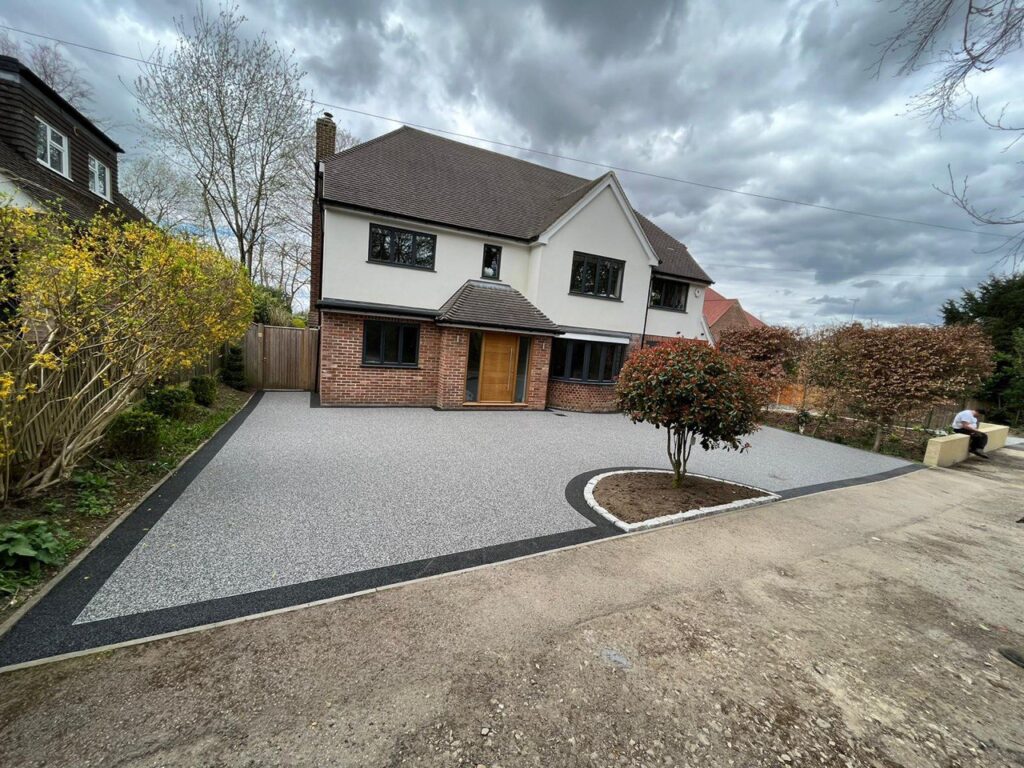
Is Tarmac Suitable for Paths and Patio Areas?
Tarmac is widely associated with driveways and access routes, but it can also be a practical surface for garden paths and patio areas. Its smooth finish, durability and straightforward maintenance make it particularly useful where functionality, accessibility and dependable everyday performance are priorities.
However, a successful tarmac path or patio depends on more than the surface material itself. The intended use, layout, drainage, ground preparation and surrounding garden design must all be considered before installation.
When Does Tarmac Work Well for Garden Paths and Patios?
Creating Smooth and Accessible Paths
A properly installed tarmac path provides a continuous surface without loose stones, uneven joints or wide gaps. This can make it easier to use with pushchairs, wheelchairs, mobility aids, bicycles and garden equipment.
The smooth finish is also useful for frequently travelled routes between entrances, garages, sheds, seating areas and other parts of the garden. Unlike individual paving units, tarmac does not contain numerous joints where weeds can establish or small sections can move independently.
For properties in Norwich, Norfolk, it can offer a practical way to create clearly defined routes through gardens of different sizes and layouts.
Providing a Durable Patio Surface
Tarmac can be suitable for patios intended for regular use, including outdoor seating, dining and general household activities. Once correctly laid, the surface can withstand frequent foot traffic and accommodate ordinary garden furniture.
Its performance depends heavily on the construction beneath it. If the sub-base is too shallow, poorly compacted or unsuitable for the ground conditions, settlement and cracking may develop. Professional preparation ensures that the finished patio is supported evenly rather than relying on the surface layer alone.
Connecting Different Outdoor Areas
One of tarmac’s practical advantages is its ability to create a continuous finish across adjoining spaces. A path can connect naturally with a driveway, side access or patio without abrupt changes in material.
This can make an outdoor layout feel more organised and improve movement around the property. It may be particularly effective where a simple, understated surface is preferred or where several frequently used areas need to be linked together.
The route and dimensions should be planned carefully so the surface complements the garden rather than covering more space than necessary.
Is Tarmac Comfortable Underfoot?
A well-finished tarmac surface is firm, level and generally comfortable to walk across. It avoids the movement sometimes associated with loose gravel and provides fewer edges than paving made from separate blocks or slabs.
Because tarmac is a dark surface, it can become warm during prolonged periods of direct sunlight. This should be considered when deciding where to position a patio or seating area, particularly in a garden that receives little shade.
The intended use of the area should guide the decision. Tarmac may be highly suitable for practical paths and informal patios, while a more decorative material might be preferred where appearance is the main priority.
Drainage Must Be Planned Correctly
Water management is essential for every path and patio, regardless of the chosen surface. A tarmac area must be formed with suitable gradients so rainwater can travel towards an appropriate drainage point rather than collecting in low sections.
Poor drainage may lead to standing water, surface deterioration or moisture being directed towards adjoining structures and garden areas. The installation should therefore account for:
- The natural levels of the garden
- The position of nearby buildings
- Existing drainage arrangements
- The size and shape of the surfaced area
- Where rainfall will flow during heavy or prolonged showers
Good planning allows the path or patio to remain usable while protecting its construction from avoidable water-related damage.
Edge Restraints Support the Surface
Tarmac performs best when its edges are properly supported. Without suitable restraints, the perimeter may gradually crumble or spread under repeated use.
Kerbs, blocks or other firm edging materials can protect the tarmac while creating a defined border between the surface and surrounding lawns, planting beds or gravel. Contrasting edging can also add visual detail to what would otherwise be a plain expanse.
The edging should be included in the installation plan rather than treated as a decorative addition afterwards.
How Much Maintenance Does Tarmac Require?
Tarmac paths and patios are relatively easy to care for. Routine sweeping removes leaves, soil and garden debris, while occasional cleaning can help maintain the surface’s appearance.
Weeds are less likely to grow through an intact surface, although growth can occur around edges or in cracks if damage is left unresolved. Small defects should be assessed before they widen or allow water to affect the supporting layers.
Keeping nearby drainage points clear is equally important. Even a well-constructed surface may experience standing water if leaves and debris obstruct the intended flow.
When Might Another Surface Be More Suitable?
Tarmac is not automatically the right choice for every patio or path. A property owner seeking detailed patterns, varied colours or a highly decorative finish may prefer another material. Very small or unusually shaped areas may also require careful consideration to ensure the result looks balanced.
The decision should be based on:
- How frequently the area will be used
- Whether accessibility is important
- The desired appearance
- Existing surfaces around the property
- Ground and drainage conditions
- The type of maintenance the owner prefers
A professional site assessment can establish whether tarmac suits both the practical requirements and the overall garden design.
Why Professional Installation Matters
The visible tarmac is only the final part of the construction. Excavation depth, sub-base selection, compaction, gradients, edging and surface preparation all influence how well the finished area performs.
Professional installation ensures that these elements work together. It also allows potential issues with levels, weak ground or water movement to be identified before the surface is laid.
Conclusion
Tarmac can be a suitable choice for paths and patio areas where a smooth, durable and low-maintenance surface is required. It works particularly well for accessible garden routes, regularly used seating areas and layouts that benefit from a continuous finish.
Norwich Driveway Contractors provides professionally planned tarmac surfacing throughout Norwich, Norfolk. If you are considering a new path or patio, contact our team to arrange an assessment and discuss whether tarmac is appropriate for your outdoor space.
Call us on: 01603 361 697
Click here to find out more about Norwich Driveway Contractors
Click here to complete our contact form and see how we can help with your driveway needs.